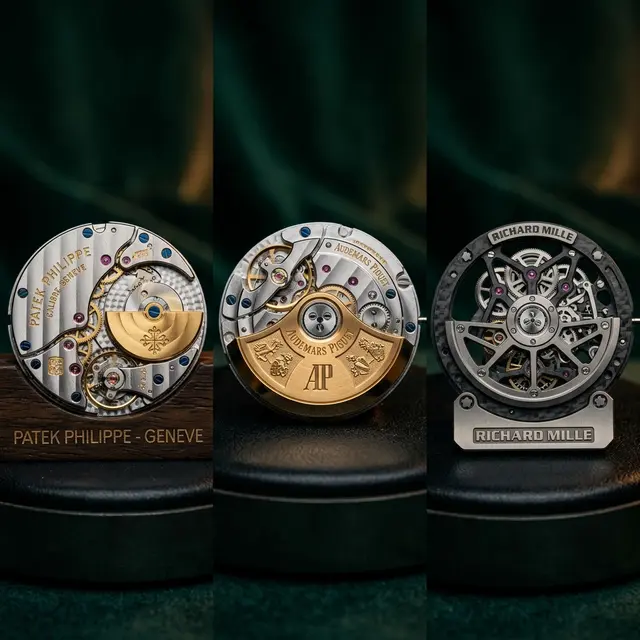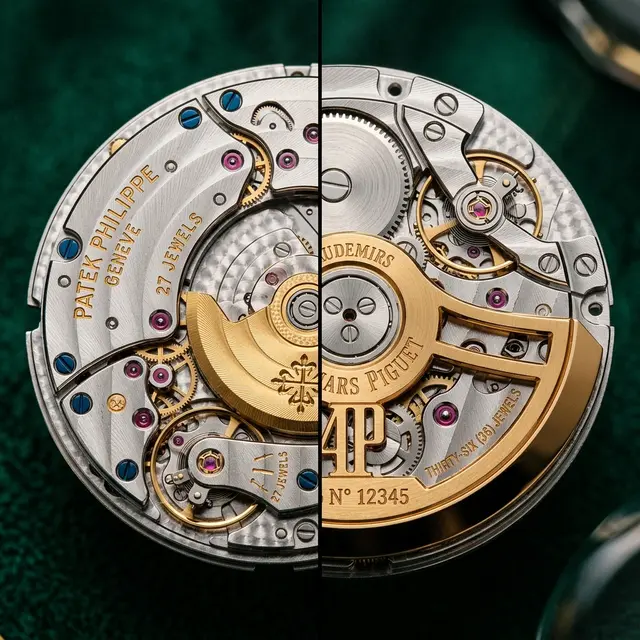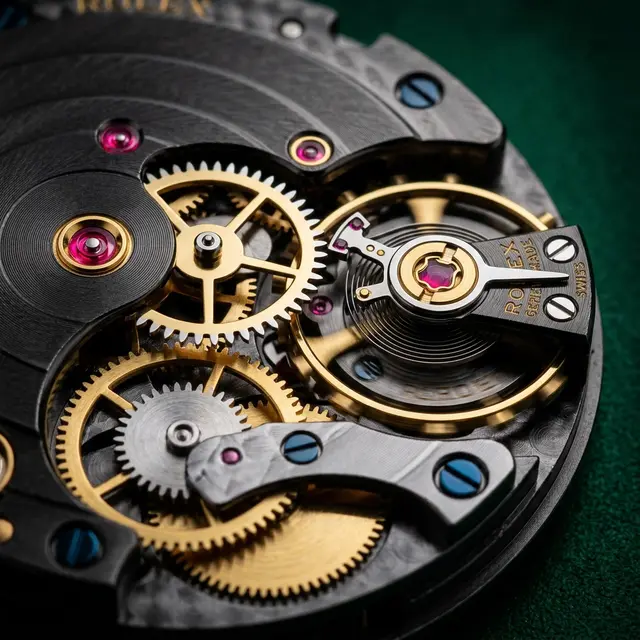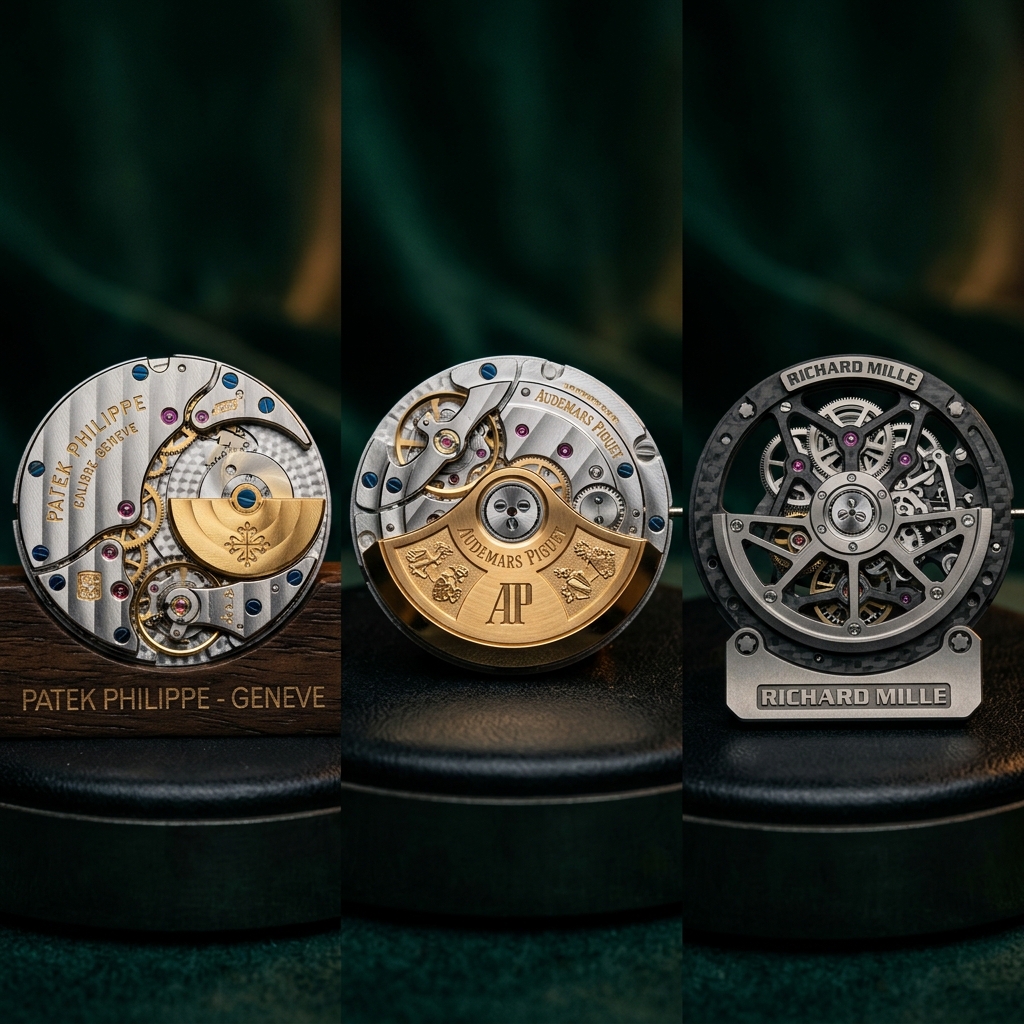
The ultimate synthesis of modern horological engineering. This guide compares the traditional excellence of Patek Philippe and Audemars Piguet with the high-resistance, material-driven philosophy of Richard Mille.
Global Movement Identifier
Patek / AP / RM Cross-Lookup
Enter a calibre reference (e.g., 240, 7121, CRMA1, RMAC4) to identify the manufacture and view its technical performance data.
Calibre Reference
Base Specs
Performance / Material
I. Richard Mille: Material Innovation
| Material | Key Property | Typical Model Usage |
|---|---|---|
| Carbon TPT | High tensile strength; 200% crack resistance | RM 27-03, RM 35-02 |
| Quartz TPT | Color vibrancy; acoustic dampening | RM 11-03, RM 35-03 |
| Grade 5 Titanium | Ultra-rigid (90% Ti, 6% Al, 4% V) | RM 055, RMAC Series |
| LITAL | Lithium-Aluminum alloy (Aeronautics) | RM 027 Rafael Nadal |
II. Audemars Piguet: The 71xx Platform
| Movement | Thickness | Frequency | Innovation |
|---|---|---|---|
| Calibre 2121 | 3.05 mm | 2.75 Hz | Original 1972 Jumbo engine |
| Calibre 7121 | 3.20 mm | 4.00 Hz | Patented extra-thin quick-set date |
| Calibre 7138 | N/A | 4.00 Hz | 2025 Crown-adjusted Perpetual Calendar |
| Calibre 6401 | 5.7 mm | 4.00 Hz | 2026 Compact Integrated Chronograph |
III. Patek Philippe: Manual Winding Evolution
| Calibre | Power Reserve | Diameter | Technical Advantage |
|---|---|---|---|
| 215 PS | 44 hours | 21.5 mm | Legacy manual workhorse |
| 30-255 PS | 65 hours | 31.0 mm | Parallel twin-barrel; high torque |
| 31-505 8J | 192 hours | N/A | 8-day reserve; Pulsomax escapement |
IV. Richard Mille: CRMA In-House Series
| Calibre | Typical Model | Key Feature |
|---|---|---|
| CRMA1 | RM 037 | Variable-geometry rotor; Function selector |
| CRMA2 | RM 07-01 | Bidirectional winding; Ceramic ball bearings |
| CRMA7 | RM 67-02 | Extra-flat architecture; Athlete optimized |
| RMAC4 | RM 65-01 | High-frequency (5 Hz) Split-Seconds |
"The shift toward silicon, titanium, and crown-adjusted complications reflects a market that demands performance alongside prestige."