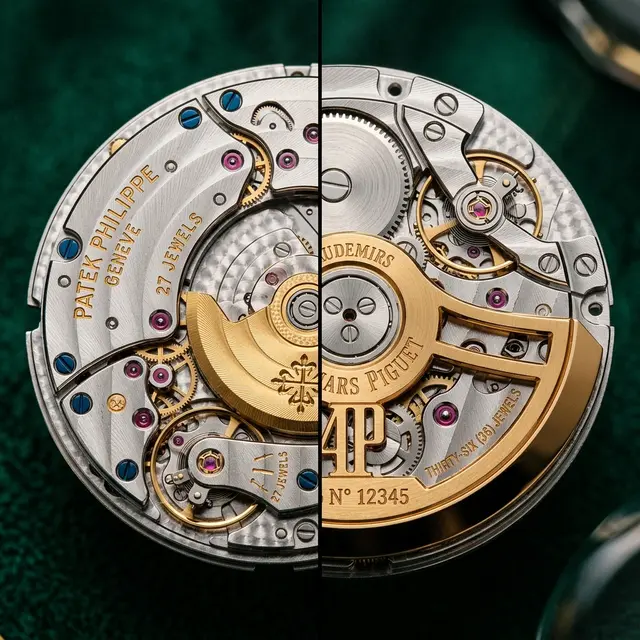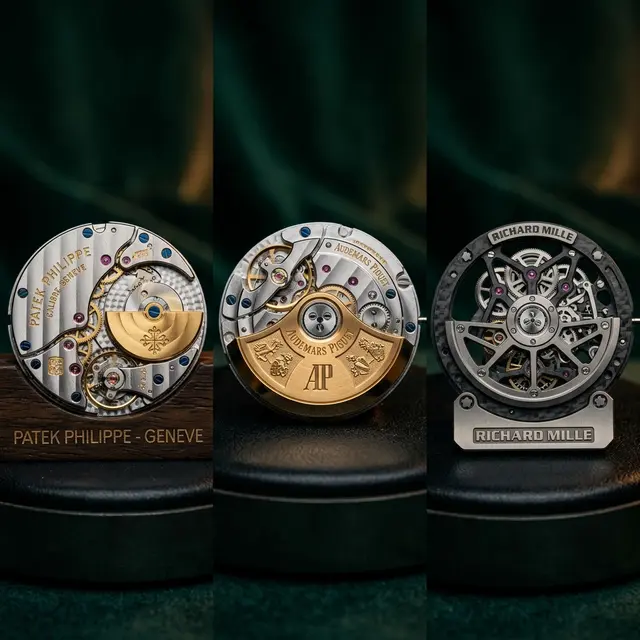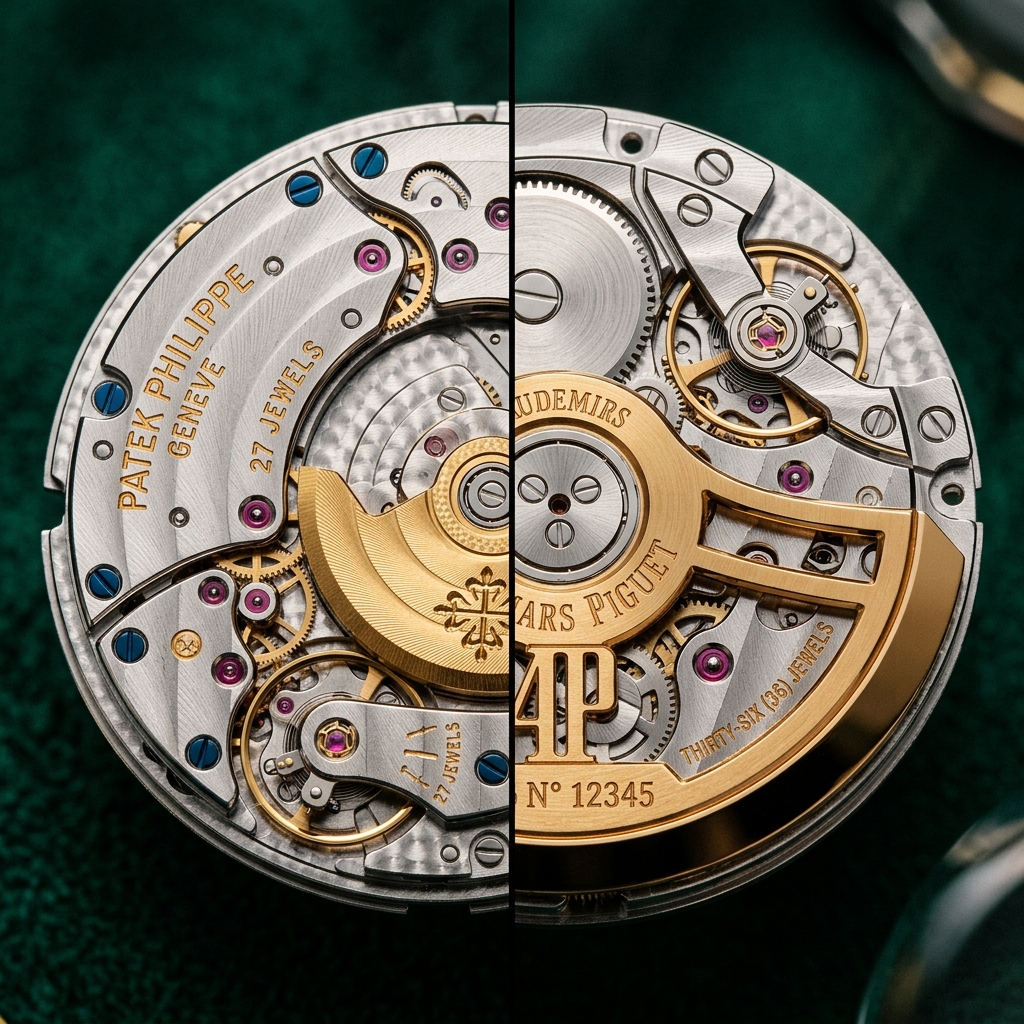
A comparative technical analysis of the two pillars of high watchmaking. This guide provides a direct side-by-side examination of the movement architectures that define Patek Philippe and Audemars Piguet.
Cross-Brand Identifier
Patek / AP Movement Lookup
Enter a calibre reference (e.g., 240, 2121, 324, 3120) to identify the manufacture and view technical performance data.
Calibre Reference
Base Specs
Technical DNA
I. Quality Standards and Finishing
| Feature | Patek Philippe (PP Seal) | Audemars Piguet (Standard) |
|---|---|---|
| Finishing | Strictly traditional; Anglage; Perlage; Côtes de Genève | Mix of traditional and modern; CNC finishing on some 4302 parts |
| Rate Deviation | -3 / +2 seconds per day | COSC standards or better (-4 / +6s) |
| Certification | In-house Patek Philippe Seal (since 2009) | Varies; traditionally focused on Vallée de Joux craftsmanship |
II. High-Performance Chronograph Comparison
| Calibre | Manufacture | Architecture | Innovation |
|---|---|---|---|
| CH 29-535 PS | Patek Philippe | Manual Integrated | 6 Patents; Precise jumping minute counter |
| CH 28-520 | Patek Philippe | Auto Integrated | Vertical clutch; Flyback; Flyback function |
| 4401 | Audemars Piguet | Auto Integrated | In-house flyback; 70h PR; Instant-jump date |
| 2385 | Audemars Piguet | Auto Modular | Extra-thin; Frederic Piguet 1185 base |
"Patek Philippe represents the urban perfection of the Genevan tradition, while Audemars Piguet embodies the rugged, independent spirit of the Vallée de Joux."