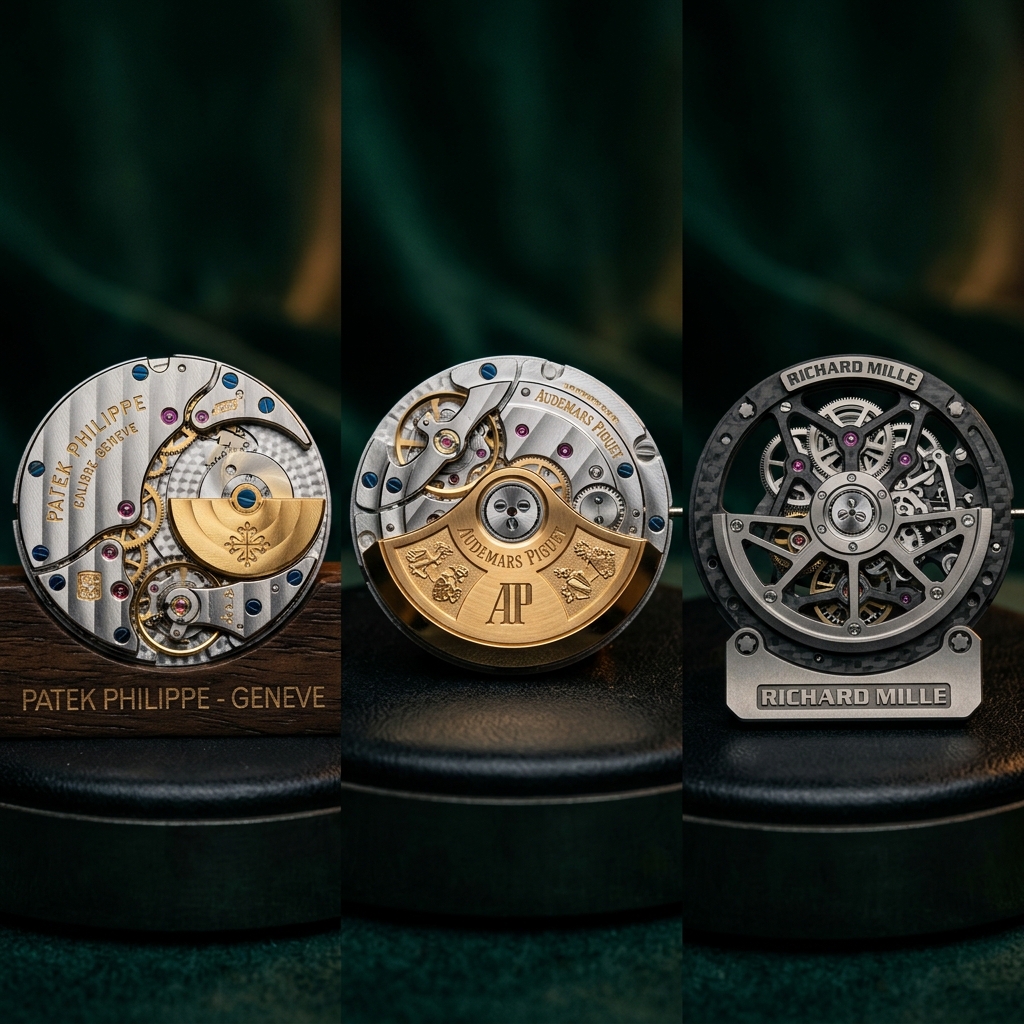
The landscape of high watchmaking, often referred to as Haute Horlogerie, is governed by a select group of manufactures that have preserved the traditional crafts of Geneva and the Vallée de Joux while simultaneously pioneering the materials science of the twenty-first century. At the zenith of this hierarchy stand Patek Philippe and Audemars Piguet.
Foundations of Excellence and the Birth of the Keyless Era
Patek Philippe, established in the urban heart of Geneva, has become the global standard for the "classic grammar" of watchmaking. In contrast, Audemars Piguet, born in the rugged isolation of Le Brassus, has forged an identity rooted in technical audacity and the mastery of ultra-thin mechanisms.
Historical Milestones of the Founding Era
| Year | Manufacturer | Innovation / Event | Significance |
|---|---|---|---|
| 1842 | Patek Philippe | Keyless Winding | Adrien Philippe eliminates the winding key. |
| 1851 | Patek Philippe | Queen Victoria Acquisition | Pendant watch becomes a symbol of royal patronage. |
| 1868 | Patek Philippe | First Swiss Wristwatch | Created for Countess Koscowicz. |
| 1875 | Audemars Piguet | Foundation in Le Brassus | Specialized focus on complications and miniaturization. |
| 1892 | Audemars Piguet | First Repeater Wristwatch | Miniaturization of chiming works for the wrist. |
The Standards of Perfection: Quality Seals
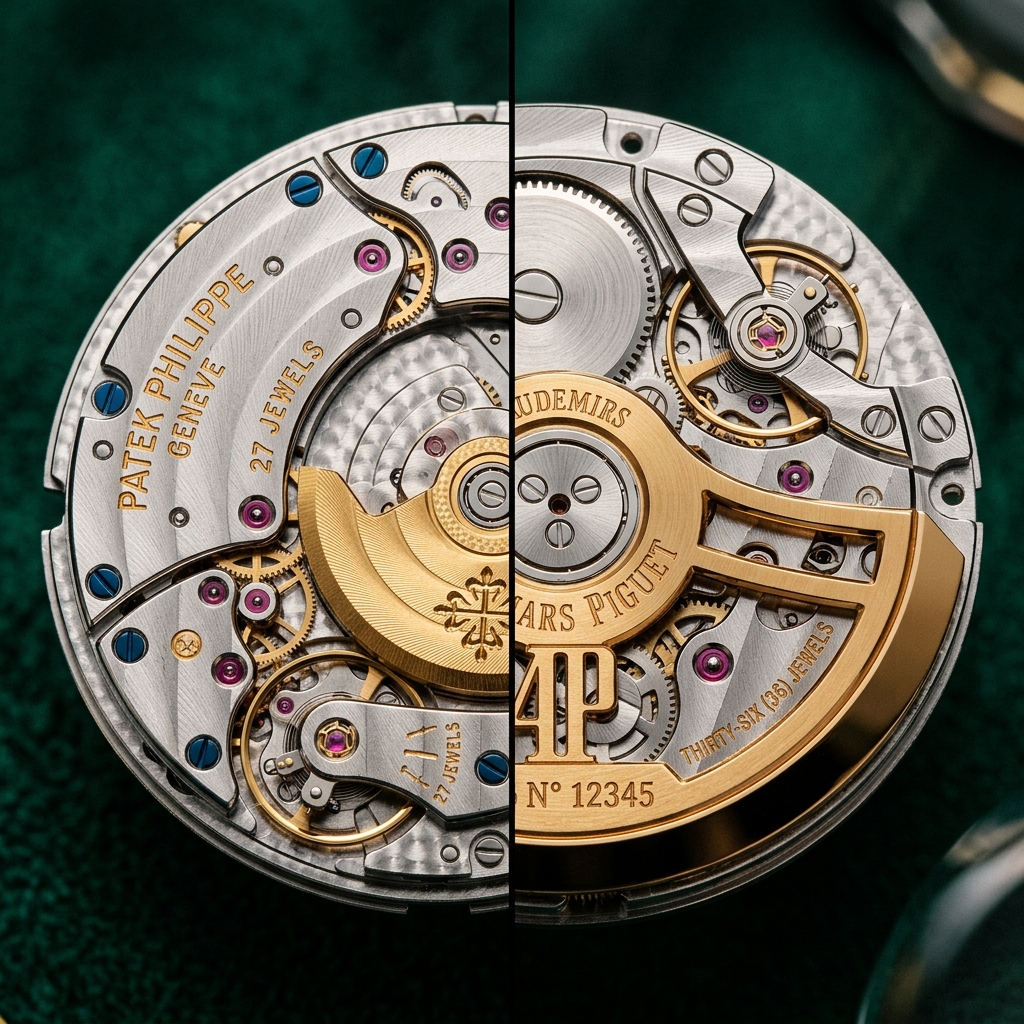
In 2009, Patek Philippe made the transition from the Geneva Seal to the Patek Philippe Seal (PP Seal), a dynamic quality hallmark that governs the entire timepiece. Audemars Piguet adheres to equally high standards, including hand-executed anglage and immaculate engraving on 22-carat gold rotors.
The Evolution of Automatic Winding
Patek Philippe's first automatic movement, the Caliber 12-600 AT (1953), featured an 18-carat gold rotor with complex guilloché decoration. Audemars Piguet addressed the automatic winding challenge with the ultra-thin Caliber 2120 (1967), which was supported by a circular track of four ruby rollers to maintain its 2.45 mm slimness.
The Micro-Rotor Paradigm: Caliber 240
Patek Philippe solved the thickness problem in 1977 with the Caliber 240, using a high-density 22-carat gold micro-rotor. This movement achieved a base height of only 2.53 mm and remains a staple of the manufacture today.
Modern Workhorses and Chronograph Architectures
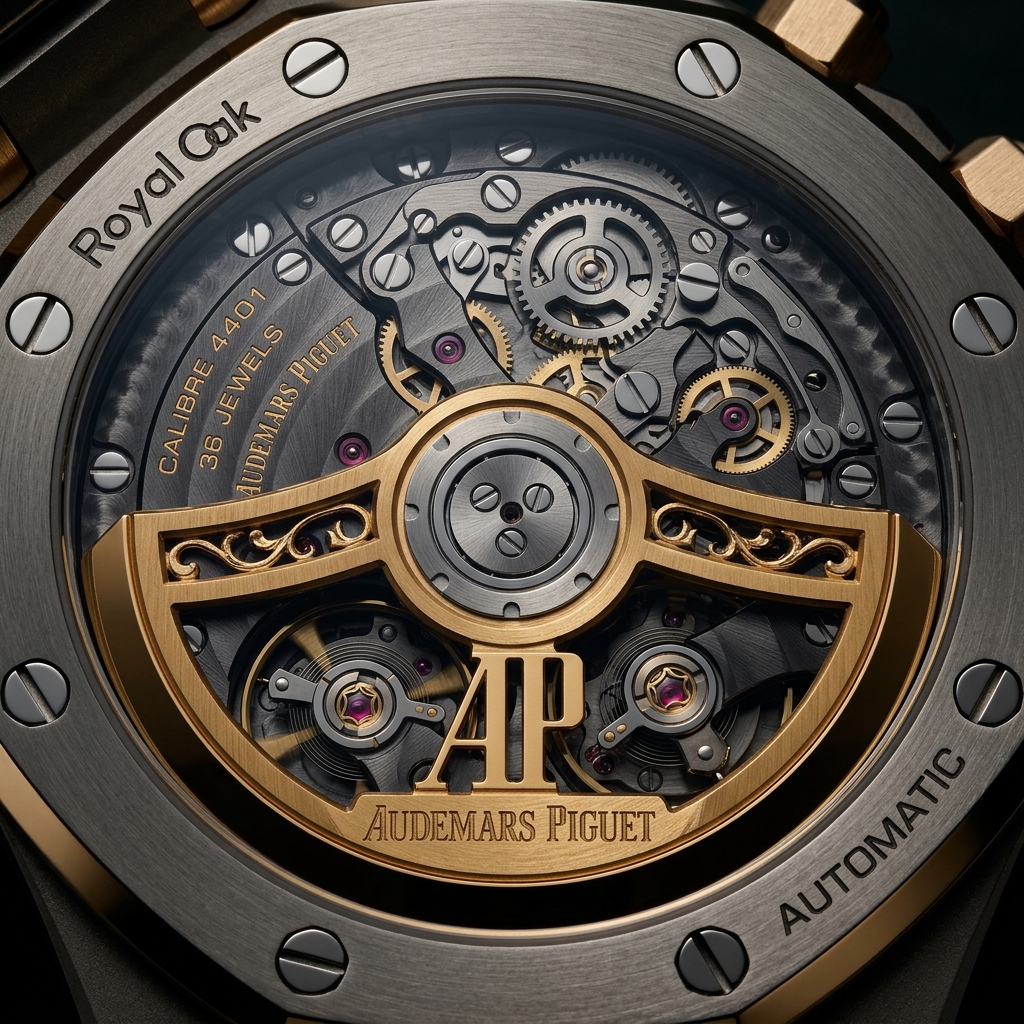
The 2019 launch of the Audemars Piguet Caliber 4302 marked a shift to high-frequency (4 Hz) precision with a 70-hour power reserve. In chronographs, Patek's CH 29-535 PS and AP's 4401 represent the pinnacle of integrated, in-house engineering, utilizing column wheels and sophisticated clutch systems.
Advanced Research and Acoustic Physics
Patek Philippe's Advanced Research program has pioneered silicon (Silinvar) technology, while Audemars Piguet's Supersonnerie (2015) has redefined the physics of sound in minute repeaters through the use of titanium soundboard membranes.
Conclusion: The Integrated Vision
While Patek Philippe emphasizes the "classic grammar" and reliability of traditional architecture, Audemars Piguet focuses on the "avant-garde" of ultra-thin complications. Both remain united by their independence and an unwavering commitment to manual craftsmanship in the mechanical age.